Strategy
Trade show marketing: what to settle before you book a stand
How to plan trade show marketing: set objectives, choose the right shows, plan promotion, design the stand, run follow-up and measure results.
What to take away
- Most teams book the stand first and set objectives afterwards, which is why measurement collapses and the show is judged on footfall rather than pipeline.
- A workable trade show marketing strategy names one primary objective, a target number of qualified conversations, and the follow-up owner before the deposit is paid.
- Contingency planning is part of the plan, not an afterthought, and continuity standards give you a structure to copy.
Start with the objective, not the floorplan
The common mistake is treating a trade show as a booking rather than a campaign. A stand is secured, a build is commissioned, and only then does anyone ask what the show is supposed to achieve. That order makes every later decision harder, because there is no test for whether a cost is justified.
Set one primary objective per show. It might be booked meetings with a named buyer profile, qualified leads handed to sales, or distributor conversations in a new market. Secondary aims can exist, but they should not compete for the same budget line.
Write the objective as a number and a date. For example, a team might target 60 qualified conversations across three days, with 20 of those converted into a follow-up call within ten working days. That is specific enough to plan against and to review afterwards.
Give the objective an owner. One named person should be accountable for the number, with authority to move spend between the four budget blocks as the show approaches. Shared ownership usually means nobody chases the follow-up in the fortnight after the doors close.
If the show is part of an international push, the objective needs to reflect it. In the UK, the Department for Business and Trade (DBT) is the main source of government export support and publishes exporting guidance on GOV.UK. General export solutions guidance sets out how trade promotion activity sits alongside market entry work, which is a useful frame when the stand is your first presence in a country.
Choose the shows before you choose the stand
Show selection is a strategic decision, not a diary decision. Two shows in the same quarter can compete for the same buyers, the same internal team and the same budget. Audit the list against your objective before committing.
Ask what proportion of attendees match your buyer profile, whether competitors exhibit, and whether the organiser publishes an audited visitor figure. If the answers are vague, treat the show as speculative and CAP the spend.
In the UK, the Audit Bureau of Circulations (ABC) audits exhibition attendance, and the Association of Event Organisers (AEO) publishes audited attendance data for many shows. Ask the organiser for the certificate.
Past exhibitors are worth a direct conversation. Ask them what the traffic was like by day and by hall position, and whether the leads they collected turned into meetings. A short call usually tells you more than a glossy prospectus.
If you are weighing up a group pavilion or a shared stand, check who controls the visitor data. Shared space can cut cost, but the lead list is often held by the organiser rather than by you.
For 2027 planning, note that some venues and organisers release floorplans and rate cards well over a year ahead. Early space booking usually buys position rather than discount, so decide what position is worth to you before you sign.
A mistake many teams make is spreading a small budget across too many events. Three poorly resourced shows rarely beat one properly planned show with a clear follow-up process. Our guide to trade show marketing strategy mistakes covers the patterns that recur most often.
Build the budget in four blocks
Split the budget into space, build and logistics, promotion, and follow-up. Teams that spend almost everything on the stand tend to underperform, because nobody knows the stand is there and nobody contacts the leads afterwards.
Illustrative £50,000 Show Budget
- Space and services£18,000
- Design, build, logistics£22,000
- Promotion£6,000
- Follow-up and reporting£4,000
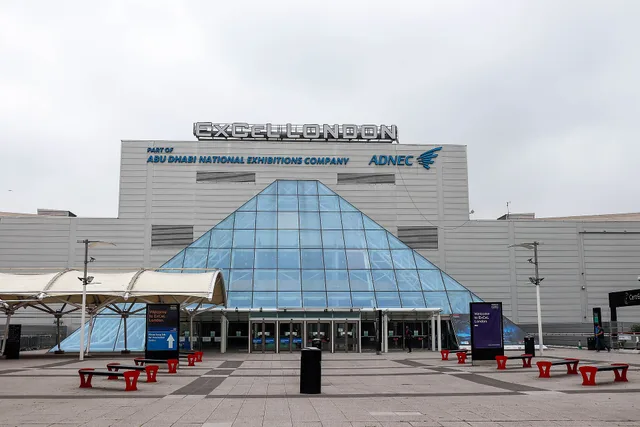
For a named example, space at ExCeL London is sold per square metre, and the rate depends on the show, hall and stand type. The organiser's rate card sets the price, and 2027 rates are not yet universally published. Ask for the rate card before you build the budget.
Real quotes vary by venue, city and build complexity, so get at least two written quotes per block before you commit. When you shortlist stand build and stand services contractors, check membership of ESSA, the Event Supplier and Services Association, and ask for references from shows of a similar size.
Check the payment schedule as carefully as the headline price. Space is usually invoiced in stages, and build contracts often ask for a deposit on signature. A plan that leaves the promotion block unfunded until the spring is a plan that will advertise nothing.
Hold a contingency line. Venue rules, stand services and shipping costs are the usual sources of overrun. Business continuity thinking applies here too, and the BSI guidance on continuity and contingency planning gives a structure for identifying what could disrupt the plan and what you would do instead. It recommends identifying critical activities and having fallback plans.
Plan the promotion as a channel mix
Promotion is where most trade show marketing strategies are thinnest. The stand exists for three days; the campaign around it should run for weeks. Work backwards from the show date and set a content and outreach calendar.
Promotion Runs Weeks Around Show
- Weeks beforeEmail database and paid social
- Show daysOn-stand collateral and invitations
- After showFollow-up outreach to leads
Email to your existing database is usually the highest-return channel, because the audience already knows you. Paid social and search can extend reach to people who match the buyer profile but are not on your list. Our trade show marketing channel strategy explains how to weight those channels by objective.
If you run paid social, the platform's own guidance is the place to start. LinkedIn's advertising best practices cover targeting, format and measurement for B2B campaigns. They recommend targeting by job title and using lead gen forms, which suits exhibitor promotion aimed at job titles rather than broad audiences.
For digital display and video creative, format rules matter more than most teams expect. The IAB UK introduction to creative best practice sets out what works for standard digital ad formats. It recommends keeping branding visible and the call to action simple, useful when you are briefing a designer on banner sizes for a show campaign.
Print still earns its place. Invitations, show guides and on-stand collateral work when the format matches the audience. The DMA's article on print format selection is a practical reference for choosing between mailers, leaflets and larger formats. It recommends matching the format to the audience and testing before a full run.
Three waves are usually enough. Send a save-the-date six weeks out, a specific invitation with a reason to visit three weeks out, and a reminder in the final week. On the stand, have something worth collecting and something worth reading later. After the show, the promotion block should pay for the follow-up sequence as well.
Design the stand around one conversation
The design should make it obvious what you sell and give staff somewhere to have a proper conversation. If visitors cannot tell within a few seconds whether you are relevant, they keep walking.
Decide the primary interaction before the design brief. That might be a demo, a sample, a short diagnostic, or a booked meeting. Everything on the stand, from signage to seating, should support that one interaction.
Staffing follows the same logic. Two people who know the product beat six who do not. Brief everyone on the objective, the qualifying questions and the handover process for leads.
Build a rota that covers breaks and the quiet spells. Exhausted staff give short answers, and the last hour of the final day is often when the best conversations happen. Cover it properly.
Measure the stand on conversations, not footfall. A quieter stand with 40 qualified conversations is a better result than a busy one with 200 badge scans nobody follows up.
Set the follow-up process before the show opens
Follow-up is the part that determines return on investment, and it is the part most often left to chance. Agree who owns each lead, what the first message says, and how quickly it goes out.
Lead Record Fields
- Person
- Company
- Conversation summary
- Agreed next step
- Date due
Speed matters. Leads contacted within a few days of the show are far easier to convert than leads contacted a fortnight later, when the conversation is cold and the buyer has moved on. Set a service level, such as first contact within two working days.
Use a shared record for every conversation. Notes should include what the buyer asked about, what they said about timing, and what you promised. That record is what makes the follow-up message specific rather than generic.
Agree the fields before the show, not after. At minimum capture the person, the company, the conversation summary, the agreed next step and the date it is due. A trade show marketing planning template can save time here by giving you the fields to capture consistently.
Lead-capture checklist
Follow-up process
- Person
- name and job title
- Company
- name and size
- Conversation summary
- what they asked about
- Agreed next step
- who does what
- Date due
- when the next step happens
30/90-day review frame
Follow-up process
- 30 dayscheck first contact rate and meetings booked
- 90 dayscheck pipeline value and cost per qualified conversation
Review the follow-up at 30 and 90 days. That review is where you learn whether the objective was realistic and where the budget should go next year.
Plan for the things that go wrong
Identify the three or four failures that would hurt most and write a short response for each.
Typical risks include a build delay, a key staff member being unavailable, a shipping problem, and a lead capture system failing. For each, name the person who acts and the fallback you would use.
Have an offline capture method ready. Paper forms and a shared spreadsheet are unglamorous but reliable when the app or scanner fails. Test the fallback before the show, not during it.
Keep a single point of contact for the organiser and the venue. Chasing issues through multiple people wastes the hours you need on the stand.
Check what your insurance actually covers, including cancellation and transit. Most policies exclude something exhibitors assume is included, and a cancellation clause is only useful if you bought it before the risk appeared.
Set the measurement frame now
Decide what you will report before the show, so nobody argues about definitions afterwards. A short frame is enough: cost, qualified conversations, meetings booked, pipeline value created, and cost per qualified conversation.
Cost Per Qualified Conversation
- £50,000 | Illustrative total show budget
- 60 | Target qualified conversations
- £833 | Cost per qualified conversation at target
- £500 | Cost per qualified conversation at 100 leads
Cost per qualified conversation is the most useful single number, because it lets you compare shows of different sizes and formats. Calculate it as total show cost divided by qualified conversations.
Using an illustrative total show cost of £60,000 and a target of 60 qualified conversations, cost per qualified conversation would be £1,000. At 100 qualified conversations, it would fall to £600. Both figures are illustrative examples, not benchmarks.
A trade show marketing strategy framework sets out how the objective, the budget blocks and the reporting line connect across a full year, which helps when the same team runs several shows.
Send the summary to whoever approved the budget within three weeks of the show, while the details are still fresh. Report the number alongside the qualitative picture. A show that produced fewer leads but opened a new market may still be worth repeating, provided you said so in advance rather than after the fact.
Common questions
How far ahead should I plan a 2027 trade show?
For most UK shows, nine to twelve months is comfortable. Space tends to be booked earliest, so decide the show list first, then the stand, then the promotion calendar. If you are building a stand for the first time, add two months.
How much of the budget should go on the stand?
The split depends on your objective and how well known you already are. See the four-block budget section above for the starting framework, and adjust the promotion share upward if your audience does not know you.
Do we need a stand at all?
Not always. If your objective is meetings with a small number of named accounts, a meeting room and a diary full of pre-booked appointments can work better and cost less. Decide the format after the objective, not before.
What should we measure afterwards?
Qualified conversations, meetings booked, pipeline value and cost per qualified conversation. Add one qualitative judgement about whether the show reached the right buyers. Agree the reporting format before the show so the numbers stay comparable from one event to the next.
In this guide
- What a trade show marketing strategy framework means for England exhibitorsBuild a trade show marketing strategy for England using four gates—objectives, audience, channels and measurement—with guidance on budget, venues and follow-up.
- Building a trade show marketing planning template without guessworkA fill-in trade show marketing planning template for England, with fields for objectives, channels, quoted costs, compliance and results.
- Why your trade show marketing channel strategy needs a mix, not a favouriteCompare stand presence, email, paid search, trade press and social for UK trade shows, with a checklist to stop one channel eating the budget before you commit.
- Seven trade show marketing strategy mistakes to fix before you bookSeven trade show marketing strategy mistakes UK exhibitors make, from copying last year's plan to ignoring fire safety, data protection and incident reporting rules.
- Trade show marketing: a three-stage planning frameworkA trade show marketing guide to three planning stages: budget and space, stand preparation and lead capture, then rehearsal and follow-up.